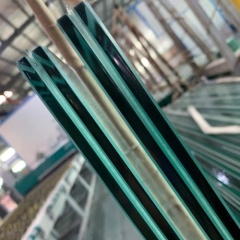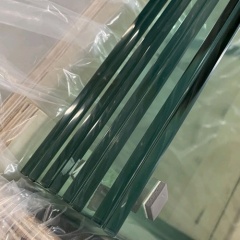
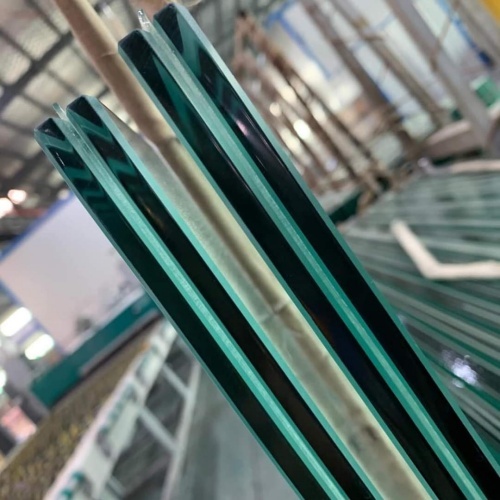
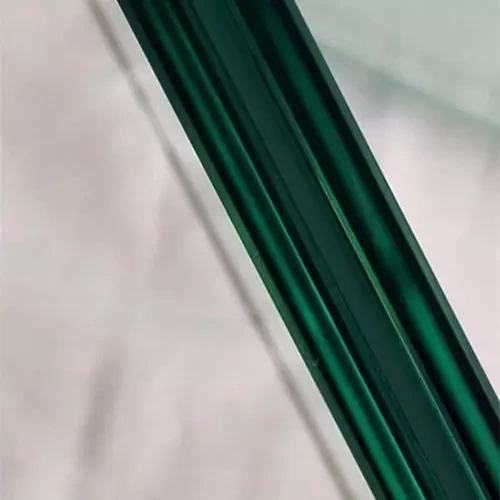
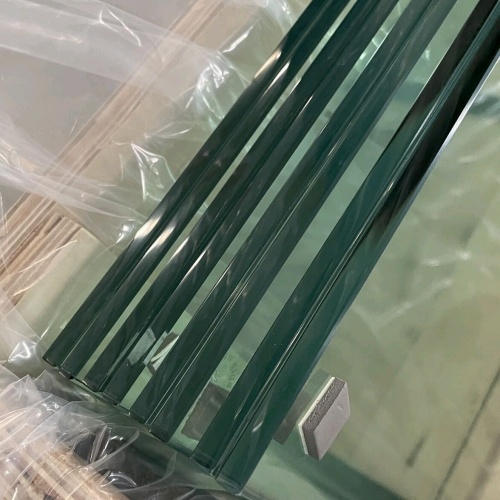
| SGP Laminated Glass | |
| Glass thick | 3mm,4mm,5mm,6mm,8mm,10mm,12mm |
| Edge processing | Seamed Edge, Round edge ,Flat edge |
| Pvb Thick | 0.38mm,0.76mm,1.14mm,1.52mm |
| Pvb Color | Colorless, white, milk white, blue, green, gray, bronze, red, etc. |
| Min Size | 100mm*100mm |
| Max Size | 3660mm*2600mm |
| Port of Loading | Xingang port |
| Package | Plywood Crates |
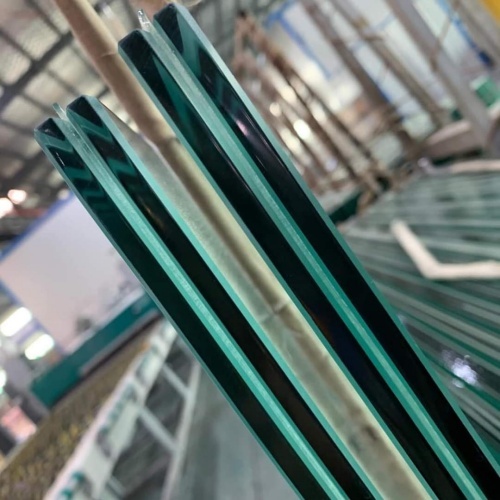
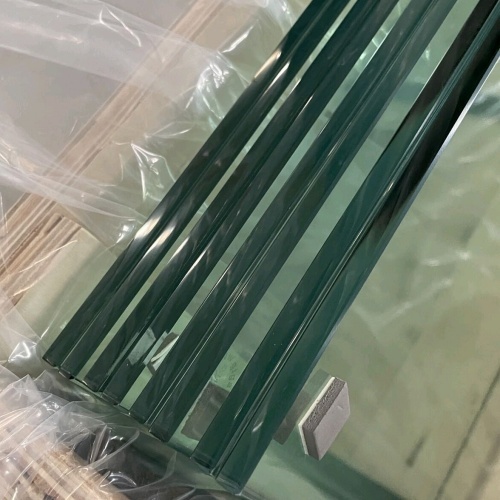
SGP laminated glass is a safety glazing panel built from two or more glass plies bonded with a SentryGlas Plus interlayer. The interlayer is the difference. A conventional PVB build-up is chosen mainly to hold fragments together after a break; the SGP film also carries load, because it is far stiffer and stronger. A cracked panel therefore keeps its shape and goes on resisting wind, impact and its own weight until it can be replaced, which is why this laminated glass belongs in curtain walls, skylights, ground-floor security glazing and storm-exposed facades rather than in general-purpose work.
Where it is specified
Architects, facade contractors, fabricators and project engineers call for it where a standard build-up would be the weak point of the design: tall or wide openings, overhead glass, shopfronts that must resist forced entry, and buildings in hurricane regions. As laminated glass suppliers we cut each panel to your drawings, so an opening that does not match a stock module is ordinary work here rather than a special request.
The interlayer does the structural work. SentryGlas Plus is engineered to take stress levels that would tear a conventional film, and it gives up to five times the strength of traditional PVB interlayers, with tensile strength and stiffness several times higher.
What that changes on site: a broken panel stays in the opening and keeps a load path instead of hanging loose; impact resistance is high enough to meet safety glazing requirements in high-stress locations such as storm glazing and security screens; and deflection under wind load stays easier to control across wide openings, because the film contributes stiffness rather than only bonding. On a tall facade this is the difference between a glazed opening that survives an impact and one that has to be boarded up.
We do not quote structural performance from a single table. The right make-up depends on the span, the fixing method and the wind load the panel has to resist, so send the opening and the load case and the build-up follows from it. For custom laminated glass over a tall entrance or a long atrium roof, settle that calculation before the frame is finalised. And when you compare laminated glass suppliers, ask for the interlayer grade rather than only the glass thickness — two panels of the same overall thickness can behave very differently once the glass has cracked.
Occupant safety
The point of any laminated build-up is that the glass does not leave the frame as loose fragments. With SentryGlas Plus the broken plies stay bonded to the interlayer, so the panel remains in place as a cracked but connected unit and the risk of injury from falling shards drops sharply. That is the behaviour safety glazing requirements are written around, and it is why this panel is specified for overhead work and public buildings. As a laminated glass manufacturer we match the interlayer gauge to the duty: a heavier film for security and overhead applications, a lighter one where fragment retention is the only requirement. Forced entry and noise Security is a by-product of the same strength. A panel that resists impact also slows a deliberate attack, so laminated glass windows are used on bank counters, commercial storefronts and institutional ground floors where ordinary glass would be through in seconds. The interlayer also dampens sound: in buildings close to traffic, rail corridors or airport approach paths it takes the edge off airborne noise and reduces the amount of extra acoustic treatment the interior needs.
Delamination is the failure mode laminated glass manufacturers work hardest to prevent, and it is where coastal and humid climates punish a low-cost build. The bond has to survive years of thermal cycling, salt air and driving rain without clouding at the edge or letting moisture creep between the plies. SentryGlas Plus resists that movement well, which is why the material is chosen for seafront facades and for buildings that see wide temperature swings between day and night.
Edge and frame details
Long-term performance also depends on what happens around the panel. A properly finished edge, a drained glazing rebate and setting blocks that do not trap water all extend service life. On laminated glass windows facing weather, the edge is the first place to look during routine maintenance: a milky line along the perimeter is the early sign that moisture has reached the bond, and it is less costly to act on then than after the panel clouds. Ordinary glass cleaner and a soft cloth keep the surface clear; abrasive pads and scrapers do more harm than the dirt.
Appearance over time
Because the tint sits inside the build rather than on the surface, the colour cannot wear off the way a applied film can. What changes the look of a facade is dirt and the surrounding materials, not the interlayer.
- Clear, undistorted view — a colourless SGP build-up reads as clearly as ordinary clear laminated glass, with no visible distortion at normal viewing distance, so displays, atria and shopfronts stay legible through the panel. - Colour-neutral by default — in the standard colourless build the glass does not shift the colour of what sits behind it, which matters where a facade has to match adjacent glazing. - Near-total UV blockage — the interlayer absorbs almost all UV radiation before it reaches the interior, so the damaging part of daylight stops at the glass line. - Interiors that keep their colour — timber, textile, artwork, merchandising and flooring fade far more slowly behind this panel, which is why museums, showrooms and commercial fit-outs put it in front of what they cannot afford to replace. - Comfort behind the glass — people working behind laminated glass windows receive far less UV load than behind ordinary glazing, which counts in long-stay offices, libraries and reading rooms. - Tint chosen separately — where you need privacy or a lower daylight level, the interlayer colour does that work; it is a build decision fixed at the order stage, not a film applied afterwards.
| Glass thickness | 3 mm, 4 mm, 5 mm, 6 mm, 8 mm, 10 mm, 12 mm |
| Interlayer | SentryGlas Plus (SGP) |
| Interlayer thickness | 0.38 mm, 0.76 mm, 1.14 mm, 1.52 mm |
| Interlayer colour | Colourless, white, milk white, blue, green, gray, bronze, red and more |
| Edge processing | Seamed Edge, Round edge ,Flat edge |
| Minimum panel size | 100 mm × 100 mm |
| Maximum panel size | 3660 mm × 2600 mm |
Three practical points decide whether an SGP specification stays on budget.
Cost: SGP laminated glass costs more than traditional laminated glass, because the interlayer itself is dearer and the lamination is less forgiving to run. Comparing laminated glass suppliers on rate per square metre alone hides the rest of the equation — the frame that has to carry the panel, the lifting equipment, the site time, and the cost of a replacement if a panel fails after handover.
Weight: the strength comes with mass. A thick multi-ply panel is heavy, so the support structure, the fixing spacing and the lifting plan need to be settled before the order is placed rather than after the steel is fabricated. On an elevation with many laminated glass windows, the frame design and the glass specification have to be developed together, not handed to two teams in sequence.
Installation: professional glazing crews are the norm for this material. The panels are large, they must not be twisted or edge-lifted, and the setting blocks and clearance details affect how the panel performs for the life of the installation. We provide handling and glazing guidance with each order, and we would rather answer a fixing question before shipment than after.
- Inspect the crate before you sign — open the crate while the vehicle is still on site, check the panel count against the packing list, and run a hand and an eye along each exposed edge for chips or impact marks. Record any damage on the delivery paperwork and photograph it there and then; a freight claim is straightforward at that moment and hard a week later. - Decide the storage position before the truck arrives — laminated glass panels belong upright and slightly angled in an A-frame or steel rack, with the base sitting on timber rather than directly on concrete. Set the rack where site traffic cannot clip it and away from cutting, grinding and welding bays, and chock or tie it so it cannot walk. - Keep the crate closed between deliveries to the floor — the crate is the primary protection on a live site. Break the seal only for the panels being glazed that shift, then close it again so cement dust, grit and metal sparks settle on the lid instead of the glass surface. - Let the panels acclimatise — glass that has travelled in a cold container or a refrigerated hold will pull condensation when it comes into a warm building. Leave the crate to stand for a few hours before unwrapping, so moisture forms on the wrapping rather than on the panel and the exposed edge. - Fit in packing order — panels are loaded in the sequence they were drawn up, so work through the crate from the top rather than picking the most convenient sheet. Keep any unused panels recorded against their panel reference and return them to the rack, still separated by their interleaves, instead of propping them where they can be knocked. - Leave edge protection on until the last minute — the edge is the one part of a laminated panel that cannot be repaired once it is bruised, because that is where moisture reaches the bond. Keep the protection in place through lifting and setting, and take it off only when the panel is going into its frame. - Keep spares crated and labelled — if the order includes replacement panels for future breakage, store them crated, labelled with their make-up and panel reference, and off the floor. A spare cut to the same build-up is what lets a damaged laminated glass unit be swapped years later without re-engineering the opening.
LYD GLASS manufactures and exports glass for project buyers, fabricators and contractors who prefer to buy direct from a production source. Everything we supply is made to order: send drawings, sizes, quantities and finishing requirements, and we return a factory quotation against them. Panels are packed for export in plywood crates or A-Steel racks and protected for sea freight. We work to your delivery schedule, support repeat orders and answer specification questions before production starts. Send your requirements for a quote.
Yes. We work from your drawings rather than a stock catalogue, so every panel is made to the opening it has to fill. Edge profile and interlayer colour are agreed at the drawing stage, and panel drawings are sent for approval before any glass is cut. Send the opening sizes and the full schedule, and the panels are drawn around them.
The interlayer. A conventional laminated build holds fragments after a break; SentryGlas Plus holds them and keeps the panel stiff, so the glass stays in its opening instead of sagging out of the frame. That difference matters on laminated windows in high-risk locations — overhead glazing, ground-floor shopfronts, storm-exposed elevations — where a break must not open the building envelope.
Yes. The panels are heavy, the edges must not be damaged, and the setting blocks and clearances affect how the glass performs for years afterwards. A glazing contractor who handles laminated glass routinely will lift the panels without twisting or edge-lifting them and will set them on correct bearings. We supply handling and glazing guidance with the order and answer fixing questions while the crew is on site.
A colourless film keeps the view neutral and stays closest to clear glass. White and milk white films soften what is behind the panel and add privacy, while blue, green, gray, bronze and red films change the tone of the daylight coming through. As a laminated glass manufacturer we build the colour into the panel, so it is fixed when the order is placed — approve it against a sample in the light of the actual room before production starts.
Keep them in the crate until the opening is ready, standing upright on an A-frame or in the rack they arrived in — never flat and never leaning against a wall. Lift by the edges with suction lifters, do not drag one panel across another, and leave the protective interleave in place until the moment of glazing. Inspect the edges when you unpack: a chipped or bruised edge is the one thing that can shorten the life of a laminated panel, so report it before installation rather than after.