


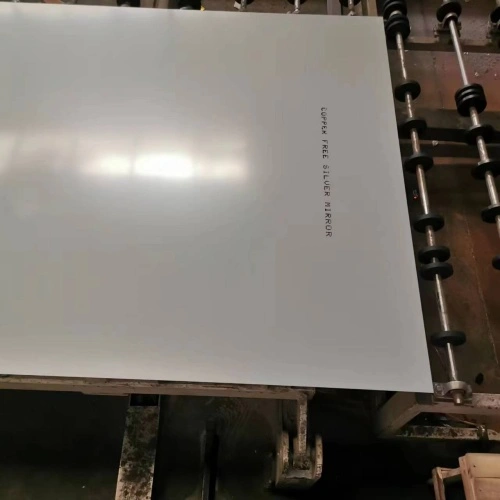
Copper and Lead Free Mirror
Copper and lead free mirror glass from a mirror glass manufacturer: 3–6 mm sheets, FENZI backing, seamed or flat edges for bathrooms and gyms.
View product
Glazing decisions are made per job, not per catalogue page — a shopfront, a shower screen and a balustrade all ask the glass for the same things: no colour cast, no distortion and a break pattern that is safe. That is why ultra clear tempered glass turns up again and again across fit-outs. This guide takes the material application by application: the thickness worth discussing, the edge finish that stays visible, the fixing detail that decides the order, and where low iron tempered glass earns its premium over standard clear.
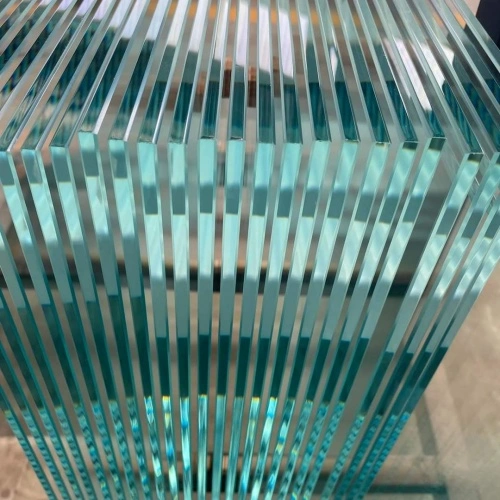
Four numbers set the envelope. Everything below is about how those numbers are used once the sheet leaves the rack and lands on a specific job.
Work backwards from the thickness
If you already know the thickness you want, use this view instead of the blocks above. It sorts the same six applications by dimension rather than by job.
| Thickness | Shopfronts | Showers | Facades | Railings | Furniture | Partitions |
|---|---|---|---|---|---|---|
| 4 mm | — | — | — | — | ○ | ○ |
| 6 mm | ○ | ○ | — | — | ✓ | ✓ |
| 8 mm | ✓ | ✓ | ○ | ○ | ✓ | ✓ |
| 10 mm | ✓ | ✓ | ✓ | ✓ | ✓ | ✓ |
| 12 mm | ✓ | ✓ | ✓ | ✓ | ✓ | ○ |
| 15 mm | ○ | ○ | ✓ | ✓ | ✓ | ○ |
| 19 mm | ○ | — | ○ | ✓ | ✓ | ○ |
Treat this as the opening position for a quotation, not as final sizing. Thickness is settled by panel size, span, wind or impact load and the code your project is inspected against, and it is confirmed with the factory before the sheet is tempered. Weight follows thickness — roughly 2.5 kg per square metre for every millimetre — so a 10 mm panel runs about 25 kg/m², which makes support and lifting part of the specification rather than an afterthought.
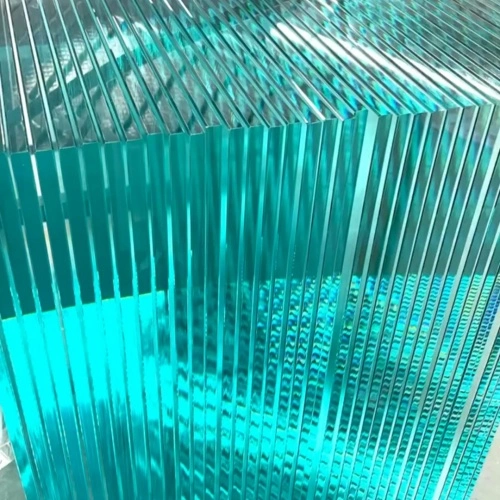
The sheet behind all six applications
Every block above is cut from the same material. It is produced with a reduced iron content, which removes most of the greenish tint of standard glass and gives much higher optical clarity, with light transmission typically up to 91% or more. Colours behind the pane stay accurate and distortion stays minimal — the two reasons it gets chosen for displays, for exposed shower panels and for thick furniture edges.
It is tempered, so it resists thermal stress and mechanical impact and breaks into small blunt pieces rather than shards. It is also easy to maintain: the smooth surface cleans down quickly and resists grime build-up, which matters on high-touch doors and screens.
| Product No. | LYD-CLITG |
|---|---|
| Material | Ultra-clear low iron tempered glass |
| Thickness | 4 mm – 19 mm |
| Edge processing | Flat edge and polished edge; seamed, round, flat or polished edges produced to drawings |
| Standards | CE EN 12150-2:2004 · ANSI Z97.1-2015(R2020) · CAN/CGSB-12.1-2022 · CPSC 16 CFR 1201-2024 |
| Tempered colour range | Clear, ultra-clear low-iron, green, bronze / brown |
| Packing | Plywood crates, A-steel racks and similar export packing |
| Port of loading | Xingang port |
Fabrication
On tint-free glass the edge reads almost as clearly as the face, so edge work is an appearance decision as much as a finishing one. All four profiles below are cut to the project drawing, and polished or beveled edges are commonly recommended wherever the edge stays exposed after installation.
Machine-ground straight edge for panels that sit inside a frame or beneath a shoe.
Clear, bright finish for frameless screens, doors and balustrades where the edge is handled.
A sloped decorative profile, commonly specified on table tops and interior door leaves.
Softened arris or radiused profile that takes the sharpness off edges handled in service.
Custom sizes and shapes are cut to drawings, with a minimum fabricated piece of 100 × 100 mm — small enough for bespoke inserts, shelf sets and signage panels.
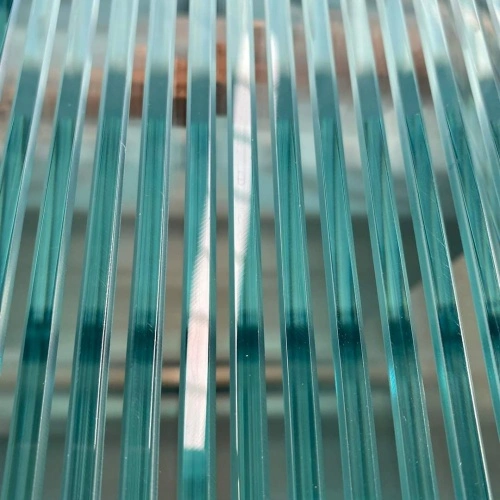
Safety and submittals
Clarity sells the sheet; the safety behaviour is what allows it into the building in the first place. Four things are worth knowing before you write it into a specification.
The sheet is heat-treated to raise its resistance to thermal stress and mechanical impact, and tempered glass is up to five times stronger than regular glass of the same thickness.
When it does break, it shatters into small blunt pieces instead of large shards, which is the property safety glazing requirements around the world are written around.
Four glazing safety standards are referenced in the specification table above. Check which one your project is inspected against, and request the matching documentation with the quote.
The material is heavy at the top of the range. Panel weight, substrate and lifting method belong in the same conversation as thickness, especially on facades and 19 mm tops.
Scenario to specification
Most enquiries fall into one of these patterns. Match yours, then confirm the detail with the factory before the drawing is signed off.
If this is your job
Specify ultra-clear low iron glass at 8–12 mm with polished edges. Face and edge stay neutral, so the product behind the pane keeps the colour the brand approved.
If this is your job
Standard clear tempered glass does the same safety job for less. Where nobody will notice the tint, spend the difference on the edge work and the hardware instead.
If this is your job
Go for 8–10 mm with polished edges, and put every hinge, clamp and handle hole on the drawing before tempering. There is no drilling afterwards.
If this is your job
Check it against the 3660 × 2440 mm maximum first. Oversize usually resolves into two panes with a mullion or a polished joint rather than a special order.
If this is your job
Fabrication goes down to 100 × 100 mm, so small inserts, shelf sets and signage panels are viable — but they still need a dimensioned drawing, not a list of sizes.
If this is your job
Keep one thickness and one edge spec across the run. Consistency between panels matters more than shaving a millimetre off any one of them.
A factory quote comes back accurate when the enquiry already answers the questions production will ask. Send these and the reply is a price, not another round of emails.
The factory works through panel size, weight and fixing with you, then quotes with export packing included, loading from Xingang port.
Keep adjacent product options together for a faster catalog comparison.
Copper and lead free mirror glass from a mirror glass manufacturer: 3–6 mm sheets, FENZI backing, seamed or flat edges for bathrooms and gyms.
View product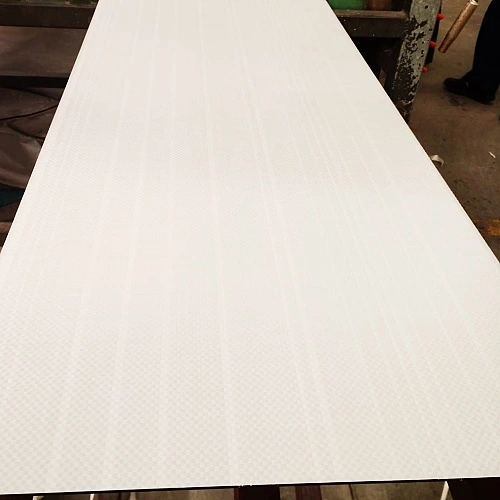
LYD GLASS makes safety backed glass mirrors for doors, windows and architectural interiors. Send size, thickness, edge work and quantity for a factory quote with export packing.
View product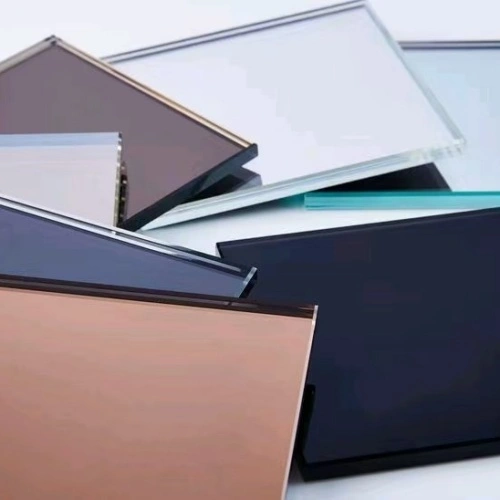
Silver mirror glass from LYD GLASS in 3–12 mm, up to 3660 × 2440 mm, with FENZI back paint and edge options for interiors, bathrooms and facades.
View product4 mm to 19 mm in the tempered range.
8 mm and 10 mm are marked suitable for shopfronts and showers; 10 mm is marked suitable across every application on the matrix.
LYD-CLITG.
Ultra-clear low-iron tempered glass.
Yes — the edge finish decides how much the glass edge is seen, so specify polished or bevelled edges for the application.
Thickness, application, panel sizes, edge finish and quantity.
