Product Overview
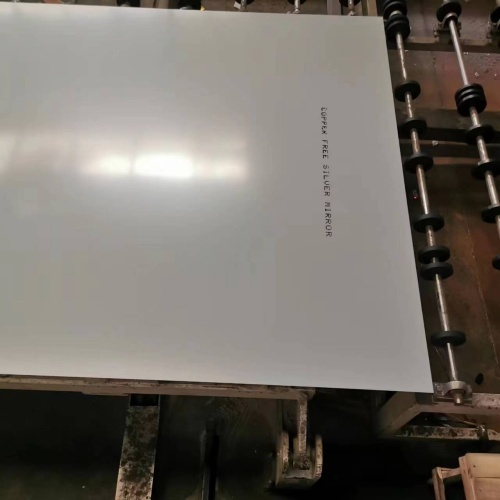
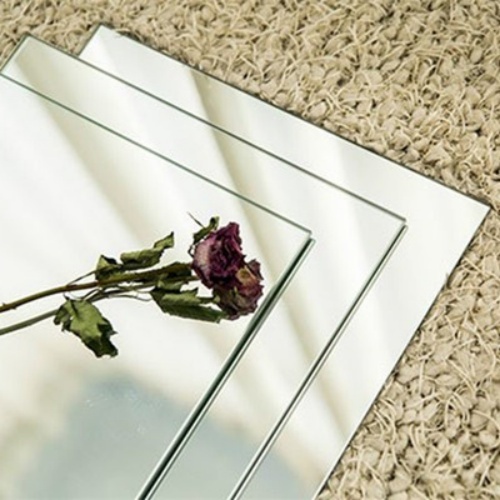
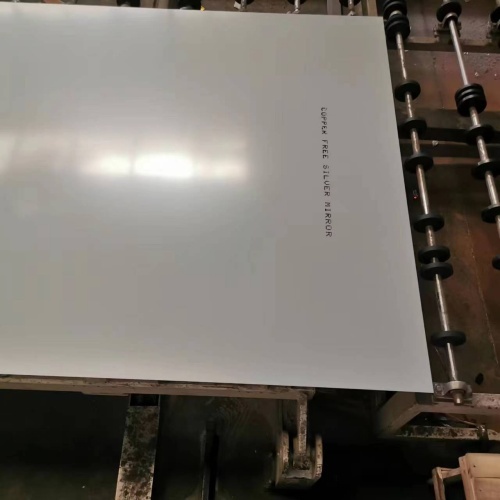
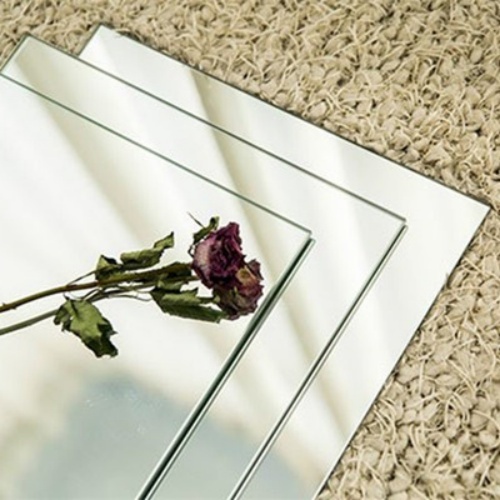
Copper and lead free mirror is silver-coated glass produced without copper in the reflective layer and without lead anywhere in the coating system. LYD GLASS cuts it to your panel list, from a small vanity panel up to a full sheet, with the edge seamed, rounded or left flat. Architects, shopfitters and contractors specify it as custom glass mirrors for bathrooms, hotel rooms, clinics, gym walls and lift lobbies — places where the sheet has to stay clear in steamy air and where the material has to survive a health or sustainability review. Italian FENZI back paint seals the silver, and that backing, more than anything else on the sheet, decides how long the reflection stays neutral. At the top of the range the sheet arrives in one piece, so a large glass mirror wall can run unbroken instead of being joined on site. In commercial settings, they are often used in hotels, restaurants, and similar public-facing environments where safety and aesthetic appeal are important.
Copper-Free Mirror Construction
- Silver goes straight onto the glass. A conventional mirror lays down a copper layer first and silvers over it. Here the silver sits directly on the glass, which takes the metal that used to start edge decay out of the build.
- What the copper was doing. It accelerated the silvering reaction and added a faint warm cast, but it is also the layer that creeps black from a cut edge once moisture works under the paint.
- What you see at the edge instead. On a copper-free plate glass mirror the border stays clean for longer, so panels that are butt-jointed or left unframed do not develop dark outlines in a wet room.
- Reflectivity is not the trade-off. Removing copper does not flatten the image; the silver layer and the sealed backing carry the clarity, and the reflection reads cool and neutral rather than warm.
- Cutting and finishing are unchanged. Sheets are cut to size and then seamed, rounded or flat-edged, and the same three edge options apply whether the custom glass mirror is a small vanity panel or a full sheet.
- Where it earns its keep. Vanity runs, gym walls and hotel bathrooms — installations where a tarnished edge means taking down a fixed panel.
- Lead entered mirror making as part of the coating and sealing chemistry, and older specifications rarely asked about it. This mirror contains none: the reflective build and the backing are lead-free, so a sheet that ends up in a family bathroom, a school washroom or a clinic corridor brings no lead-bearing coating into the room. The difference sits at the edges, the back and the offcuts. Trims and cut-outs carry no lead-bearing residue, and waste from a fit-out needs less special handling before it leaves the site. On the wall a lead-free glass mirror is indistinguishable from a conventional one — same silver image and fixing detail. What changes is the paperwork you can hand a client, and how the panel behaves once humidity reaches the coating.
Reflection and Corrosion Performance
- A neutral, high-clarity image. Silver gives a clean, cool reflection without the faint warm cast a copper under-layer adds, which matters when several panels have to match across one room.
- Edge tarnish starts later. Without copper, the coating is far less prone to the black creep that begins at a cut edge, so unframed and butt-jointed plate glass mirror panels hold their appearance through years of cleaning.
- Built for humid rooms. The sealed backing keeps moisture away from the silver in bathrooms, spas, pools and gyms — the conditions that shorten the life of an ordinary mirror.
- Flat across wide runs. A large glass mirror cut from a full sheet keeps a flat, undistorted image, so a full-height gym wall or lift-lobby panel does not ripple in the middle.
- Consistent tone within a batch. Panels cut from the same production run hold the same tone, which is what stops a multi-panel wall from looking patched.
- Maintenance stays simple. A soft, non-abrasive cloth and a mild detergent are enough; the coating does the rest.
- In architectural applications, they are sometimes used in building facades or designs where reflective surfaces improve aesthetics without compromising health and safety standards.
Environmental Safety and Eco-Friendly Production
Eliminating copper and lead changes what leaves the factory as well as what hangs on the wall. Cutting, edging and silvering all produce offcuts, slurry and rinse water, and a coating built without either metal sends fewer heavy metals into those streams. That is the version of the argument a client's environmental reviewer can actually use, because it follows from the specification rather than from a certificate someone has to take on trust. The same holds at the end of a fit-out: offcuts and damaged panels avoid the extra handling that heavy-metal-bearing waste attracts.
For the people who use the building the point is simpler. A lead-free build keeps a heavy metal out of bathrooms, school washrooms, clinic corridors and children's rooms, where exposure matters most, and a copper-free coating does not release copper into a wet room as it ages. Nothing about the reflection changes; the panel on the wall is still a silver mirror.
Adoption has moved from niche to normal. Healthcare groups, hotel chains and developers now write copper-free and lead-free into the mirror specification as a default, because it removes a metal from the building without asking anyone to accept a duller image. As a mirror glass manufacturer we keep the coating line under controlled conditions so reflection stays even from sheet to sheet, and we will tell you plainly what the material does and does not claim: the specification is no copper and no lead, not a recycled-content figure nobody can document. If your green-building submission needs a statement about the coating, ask for it with the quotation so it lands before the submittal deadline rather than after.
Where Copper-Free Mirror Works
- Bathrooms and vanity runs. Powder rooms, en-suites and hotel bathrooms, where steam and daily cleaning reach the edge of an ordinary mirror first.
- Hotels, restaurants and commercial fit-outs. Backlit mirrors, bar shelving and fitting-room walls specified as custom glass mirrors, where a tarnished border would be visible to every guest.
- Healthcare facilities. Hospitals, clinics and nursing homes, where a lead-free build keeps a heavy metal out of patient areas and simplifies the health and safety file.
- Fitness centres, spas and poolsides. High humidity, sweat and constant wipe-downs — the case where a copper-free coating and a sealed backing separate themselves from standard stock mirror.
- Architectural and lift-lobby installations. Feature walls, ceiling panels and full-height columns, produced as plate glass mirrors in large panels and butt-jointed on site.
- Multi-unit residential. Repeated bathroom and wardrobe mirrors across a development, ordered as one batch so the tone stays consistent from unit to unit.
- They are also frequently used in gyms and spas, where durability and resistance to humidity are paramount.
Specifications
| Product | Copper and lead free glass mirror |
| Glass thickness | 3 mm, 4 mm, 5 mm, 6 mm |
| Edge processing | Seamed Edge, Round edge ,Flat edge |
| Colours | Clear, French green, dark green, Euro grey, Ford blue, dark blue, pink, bronze, black and more |
| Mirror back paint | Italian FENZI paint |
| Minimum size | 300 mm × 300 mm |
| Maximum size | 3660 mm × 2440 mm |
| Port of loading | Xingang port |
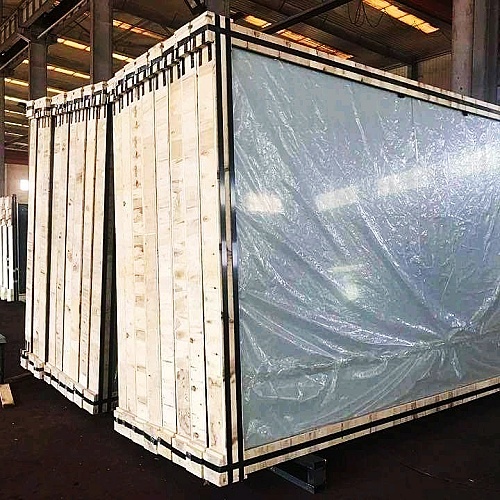
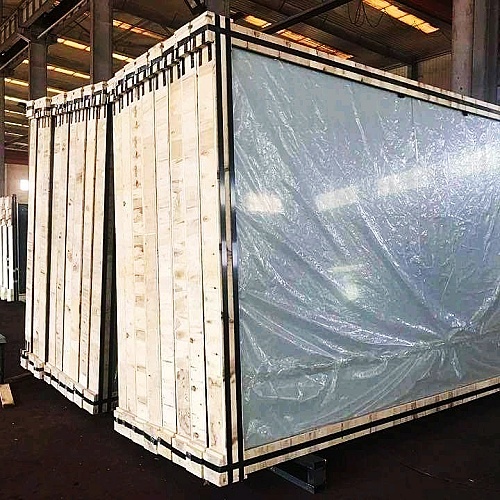
| Packing | Plywood crates or A-Steel racks |
Thickness and Panel Sizing
- Start with the fixing, not the room. A panel that sits fully against a flat substrate and is held by a frame or a continuous bead carries load very differently from one hung on four clips. Tell us how the mirror will be fixed and the thickness follows from that, not from whether the room happens to be a bathroom.
- The two thinner sheets. Framed panels, wardrobe and cabinet doors, and vanity units where the glass is fully supported behind are the natural home for the two thinnest options. They keep weight and cost down, but they need that continuous backing — leave the same sheet unframed and unsupported and it will flex.
- The mid-weight sheet. The usual specification for a wall-mounted plate glass mirror fixed with adhesive plus mechanical clips in a bathroom, hotel room or cloakroom, and the point at which a panel stops visibly bending when someone leans a hand on it.
- The heaviest sheet. Specify it for a large glass mirror running wall to wall, for panels butt-jointed without a frame, and for gyms, corridors, lift lobbies and changing rooms where bags, trolleys and cleaning equipment reach the face.
- Keep a jointed run in one thickness. Where two sheets meet edge to edge with no frame between them, both faces have to land flush; a thinner panel set beside a heavier one leaves a step that no amount of polishing will hide. Order the whole wall in one thickness from one production batch.
- Measure the opening at three heights and three widths, then take the smallest figure. Plaster and tiling are rarely dead square, and the narrowest reading is the one the panel has to pass through. Check both diagonals as well: if they differ, the reveal is out of true and the drawing should say so before cutting starts.
- Position cut-outs from a datum you trust. Sockets, switches and light fittings should be dimensioned to the centre of each hole from one fixed corner or from the floor line, not from a nearby edge that may itself be out of square. Mark them on the drawing you send us, along with the fixing points.
- Look at the wall before you settle the thickness. A substrate that is out of flat shows through the reflection as a ripple, and the thinner the sheet the more faithfully it copies the wall. Either flatten the background, mount on battens, or move up a thickness — deciding this at survey stage is far cheaper than discovering it after the adhesive has gone off.
Cost, Availability and Quality Checking
As a rule, a copper-free, lead-free mirror costs more per square metre than a conventional copper-backed sheet, because the coating chemistry and the process controls behind it are more demanding. How wide that gap runs depends on the panel sizes, the edge work and the colour; set against the cost of stripping tarnished panels out of a humid building after two or three years, it usually narrows to very little.
Availability is the second variable. Copper-free ranges are not stocked everywhere, so the mirror glass manufacturer you buy from matters as much as the coating itself — a supplier who cannot name the backing paint is unlikely to be able to name the coating either. When a delivery lands, look for labelling that states copper-free and lead-free, compare the tone of plate glass mirrors from the same batch under one light source, and inspect cut edges for chipping before the crates go to site.
Ask for the coating statement and the backing reference with the quotation. It is a great deal easier to put that into a submittal at the start of a project than to defend a substitution three months later.
Ordering and Delivery
- Send the panel list: sizes, thickness, edge profile, colour, quantity, plus any cut-outs, holes or logo marking. Drawings are quicker and safer than a written description.
- We work out the loading plan and confirm how many sheets go into each crate, so the container is filled properly and freight per square metre stays sensible.
- Our design department issues a drawing of every custom glass mirror for your approval. Nothing is cut until you sign those off.
- Production begins once the drawings are approved and the deposit has been received. One container as a rule takes 10–12 days; larger runs generally take 20–30 days after deposit and drawing approval.
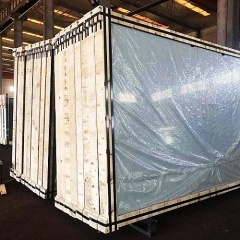
- Panels are interleaved and protected, then given export packing in plywood crates or A-Steel racks, with corner protection and strapping.
- Cargo ships from Xingang port, and we photograph the packing and loading so you can see the crate build before the vessel sails.
- If a site date is tight, say so before the order is placed and we will confirm what the line can actually hold.
Scale & Supply Capability
LYD GLASS manufactures and exports glass for project buyers, fabricators and contractors who prefer to buy direct from a production source. Everything we supply is made to order: send drawings, sizes, quantities and finishing requirements, and we return a factory quotation against them. Panels are packed for export in plywood crates or A-Steel racks and protected for sea freight. We work to your delivery schedule, support repeat orders and answer specification questions before production starts. Send your requirements for a quote.
FAQ
Q1. What are copper and lead-free mirrors?
A copper free mirror is a silver glass mirror built without a copper layer under the silver, and a lead free mirror is one whose coating and backing contain no lead. In a conventional mirror the copper layer speeds up the silvering reaction and adds a slightly warm tone, but it is also the layer that discolours first when moisture reaches a cut edge. Removing both metals leaves a mirror with a neutral reflection, a cleaner edge in wet rooms and a far simpler health and sustainability story for the building.
Q2. What makes this mirror environmentally safer than a traditional mirror?
The coating contains no copper and no lead, so cutting, edging and silvering waste carries fewer heavy metals into slurry and rinse water, and offcuts at the end of a fit-out avoid the extra handling that heavy-metal waste attracts. Because that follows from the specification rather than from a marketing claim, it holds up in healthcare, education and residential handovers where a health and safety file is part of the package.
Q3. Can you make the sizes and edge finishes my project needs?
Yes. We make custom glass mirrors to your drawings, with seamed, round or flat edges and a colour range that runs from clear through French green, Euro grey and Ford blue to bronze and black. The specifications table lists the full size and thickness range. Send drawings with the thickness and edge profile marked on each panel and we build to those drawings rather than to a stock list.
Q4. Which thickness should I use for a large wall mirror?
Framed or fully supported panels are usually fine in the thinner two options; the mid-weight sheet is the common choice for wall mirrors held by adhesive and mechanical clips; the heaviest sheet is what we suggest for a large glass mirror that spans a wide run, for butt-jointed panels, and for gym or corridor walls that take knocks. Confirm the fixing method with your installer before the order is placed, because the fixing detail decides the thickness far more than the room does.
Q5. How do I keep the surface clear in a bathroom or pool area?
Wipe with a soft, non-abrasive cloth and a mild detergent, then dry the surface instead of leaving it wet. Avoid ammonia-based, acidic and abrasive cleaners, which attack the coating at the edges even when the face still looks fine. In a wet room, ventilate after use and dry the bottom edge of the panel, since that is where moisture collects. The coating and sealed backing resist tarnish far better than a standard mirror, but no mirror enjoys standing water.
Q6. How does it compare with a standard copper-backed mirror in appearance?
Side by side, the copper-free sheet reads slightly cooler and more neutral, because there is no warm copper layer under the silver. On plate glass mirrors the bigger difference shows at the edge: a copper-backed panel starts to darken where moisture reaches the cut, while a copper-free panel holds its line. In a room with mixed lighting the neutral tone is generally easier to match across several panels.