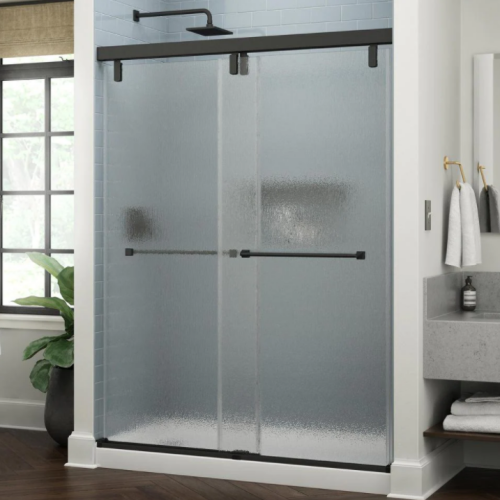
| Rain Tempered Glass | |
| Glass thick | 4mm,5mm,6mm,8mm etc |
| Edge processing | Seamed Edge, Round edge ,Flat edge |
| Standard | CE EN 12150-2:2004 |
| ANSI Z97.1-2015(R2020) | |
| CAN/CGSB-12.1-2022 | |
| CPSC 16 CFR 1201-2024 | |
| Min Size | 100mm*100mm |
| Max Size | 1830mm*2440mm |
| Port of Loading | Xingang port |
| Package | Plywood Crates |

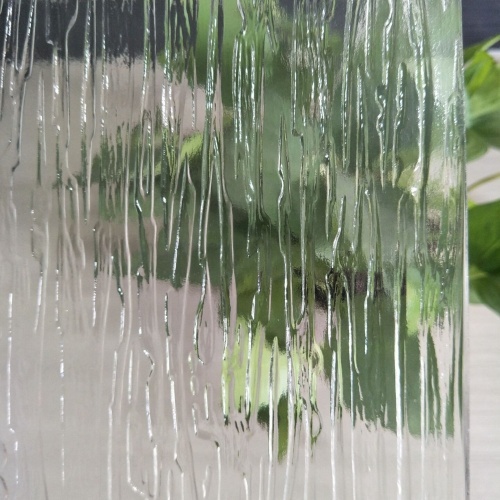

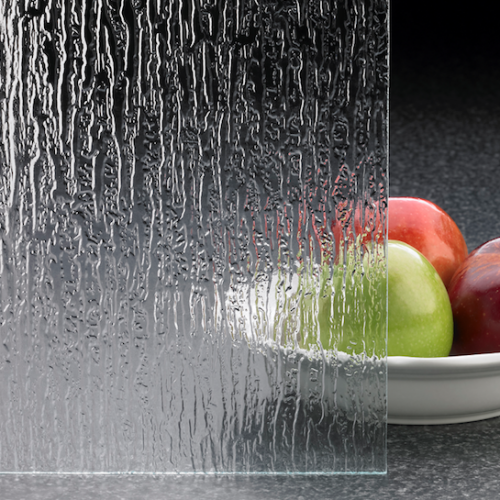
Privacy in a rain texture is a question of light and distance rather than a fixed rating. Close to the panel you can make out colour and movement; from a few metres, bodies become shapes and faces stop resolving. Textured tempered glass does not black anything out and was never meant to — it keeps the daylight coming while removing the detail that makes a window feel exposed.
Which side you can see from depends on which side is brighter. During the day that usually means the interior is private and the view out is soft. At night, with the room light on, the effect reverses and the panel becomes a gently glowing screen for anyone outside. The same logic applies to a tempered glass shower door: the pattern softens the outline without hiding that someone is there. If a bathroom or a ground-floor office needs concealment after dark as well, plan a blind, a screen or a second layer behind the panel rather than expecting the texture to do that job alone.
In offices, patterned tempered glass is normally used to keep sightlines off desks and whiteboards without closing the room down. Setting the partition so the bright side faces the working area keeps the visual privacy on the corridor side, which is usually where it is wanted.
Before the drawing is released, stand where the privacy actually matters — the neighbour's window, the corridor, the street — and think about what that position sees at midday and again after dark. The answer changes with the light, and it is far easier to settle now than after the panels are hung.
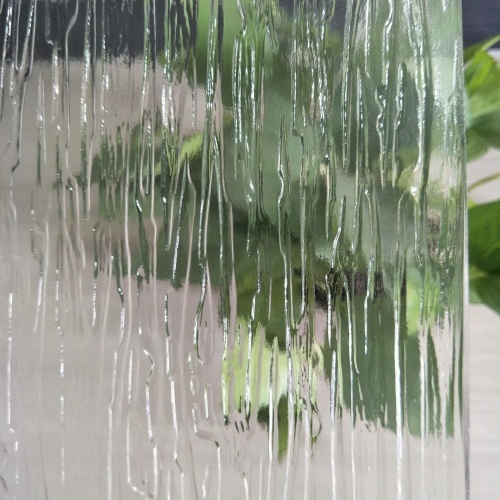
Rain tempered glass is textured tempered glass: the surface carries a continuous run of fine vertical waves that looks, close up, like water sheeting down a pane. Stand a few steps back and the pattern turns whatever sits behind the glass into shape and colour instead of detail, while the panel stays translucent so the room keeps its daylight. The texture is formed before tempering, so the pattern and the strength arrive in the same sheet — the glazier setting it, the fabricator building the frame and the designer choosing the finish are all working with one panel, not a texture applied on top of a separate safety step. Most enquiries come from projects where a clear pane would put the room on display: wet areas first, then the interior partitions and windows behind them. Contractors, fabricators, interior designers and project buyers order it as custom tempered glass panels cut to their drawings. As a tempered glass supplier we quote the textured sheet, the edge work and the export packing together, so the figure you approve covers the panel as it will arrive.
Tempering starts with the sheet at softening temperature and cools it fast and evenly. The skin of the glass freezes while the core is still contracting, leaving a compressive layer over a tensile centre. In practice that means the panel shrugs off knocks, slams and thermal shock which would crack ordinary annealed glass, and it does so without the extra thickness a heavier annealed pane would need.
The break behaviour matters as much as the strength. Where annealed glass fails into long, sharp shards, tempered glass releases at once into small blunt pieces — which is why it is the default anywhere a person might walk into, lean on or stand behind the panel. Panels are produced against the standards shown in the specifications table, covering European, US and Canadian requirements, so a specification citing any of them can be quoted against the same sheet.
The edge you choose is not only cosmetic. Chips and shell-outs at an exposed edge are where a tempered panel usually starts to fail, so edges are ground and finished before tempering and then protected through packing. On a wet-area or door installation that edge quality, together with a frame that neither clamps nor twists the glass, does more for service life than any surface treatment.
Durability here is about the working environment rather than a laboratory figure: steam, hot water, sun through a window and a door pushed shut a hundred times a day. The panel is expected to take all of it and stay flat and clear behind the texture.
| Product code | LYD-RTG |
| Surface | Rain texture, vertical ripple, translucent |
| Base material | Tempered float glass |
| Glass thickness | 4 mm, 5 mm, 6 mm, 8 mm and other thicknesses on arrangement |
| Edge processing | Seamed Edge, Round edge ,Flat edge |
| Standard | CE EN 12150-2:2004 |
| Minimum size | 100 mm × 100 mm |
| Maximum size | 1830 mm × 2440 mm |
| Port of loading | Xingang port |
| Package | Plywood Crates |
Almost every panel we ship is made to a drawing, and the choices run wider than the standard thickness list suggests. Thickness and panel size follow the range in the specifications, so one order can carry a small transom and a full door panel. Edge work is seamed, round or flat — a seamed edge for a framed or channel-set panel, a round or flat profile where the edge is on show or hands pass close to it.
Cut-outs belong on the drawing rather than in a site instruction. Hinge positions, handle holes, water-jet shapes and corner details are machined and the edges finished before the sheet goes through the tempering furnace, because tempered glass cannot be cut, drilled or trimmed afterwards. Once the shop drawing comes back to you for approval, that geometry is fixed.
If the ripple needs to run a particular way, or you need a different patterned tempered glass face, raise it at enquiry stage. Pattern and orientation are arranged case by case, and it is far easier to agree on a sample face than to argue about a finished panel.
The other lever is consistency. A run of identical panels is simpler to produce, pack and replace later than twenty individual sizes, so where the design allows, grouping openings into a few repeated sizes keeps the finished work neater and the schedule more predictable. Working as a tempered glass supplier rather than a stockist, we produce to the drawing you approve, so the panel arrives with its cut-outs already in it.
The rain texture asks for less care than people expect, provided the cleaning stays gentle. A soft cloth or squeegee with warm water and a mild pH-neutral detergent handles day-to-day marks, and a microfibre cloth dried over the surface afterwards stops water spotting. Abrasive powders, scouring pads, steel wool and blades are what to keep away from the textured face — they dull the ripple and leave a patch that no amount of polishing brings back.
In a shower, a squeegee pass after the last use is worth more than any product. Soap residue and limescale lift easily while fresh, and a mild cleaner left to sit for a minute will usually loosen what has dried on. Rinse the panel and dry the frame, hinges and track as well as the glass, because the hardware and the seals normally age before the glass does.
Two things are worth a look on any maintenance round. Check along the edges and at the setting blocks for chips or movement, since edge damage is where a tempered panel is most vulnerable. Wipe the bottom channel and the seals so water is not left standing against the edge.
There is no special routine for the texture itself. Cleaned this way, the panel keeps its appearance and stays comfortable to look through, which is what ease of maintenance should mean on a designed surface: it does not become a second job.
LYD GLASS manufactures and exports glass for project buyers, fabricators and contractors who prefer to buy direct from a production source. Everything we supply is made to order: send drawings, sizes, quantities and finishing requirements, and we return a factory quotation against them. Panels are packed for export in plywood crates or A-Steel racks and protected for sea freight. We work to your delivery schedule, support repeat orders and answer specification questions before production starts. Send your requirements for a quote.
The sheet is heated and then cooled rapidly, which leaves its surfaces in compression and makes the panel far more resistant to impact and thermal stress than ordinary annealed glass. If it does break, it releases into small blunt fragments rather than long sharp shards, so a wet floor or a busy corridor does not turn an accident into a serious injury. Panels are produced against the standards listed in the specifications table, and edges are ground and finished before tempering, because an exposed edge is where a tempered panel is most likely to fail.
Thickness and panel size follow the standard range in the specifications; edge work comes in seamed, round or flat profile; and cut-outs for hinges, handles and fixings can all be set on the drawing. As a tempered glass supplier working to drawings, we also confirm ripple direction and any pattern variation at enquiry stage, so the panel arrives ready to install without further machining.
Warm water, a mild pH-neutral detergent and a soft cloth or squeegee are enough for everyday marks. Keep abrasive powders, scouring pads and blades off the face, because they dull the ripple and leave a visible patch. A squeegee pass after showering and a wipe along the bottom edge and seals keep both the glass and the hardware in good order.
Yes. The tempered body handles the thermal stress of sun and shade far better than annealed glass, and the texture resists weather while breaking up reflections across the elevation. Exterior work needs framing, seals and fixings detailed for wind load and drainage, so include the facade drawings with your enquiry and we will quote against them.
Clear glass gives an unobstructed view and is the right choice where nothing needs screening. A grey tint cuts glare and solar gain but also darkens the interior. The rain texture sits between them: it keeps daylight and the natural colour of the room while removing the detail of what is behind it, and it does that with a formed surface rather than a coating that can peel.
Yes. Furniture and shelving are among the most common uses for tempered glass plates, and the tempered panel takes the knocks furniture receives while the ripple reads as a design surface up close. Specify a polished or flat edge where the edge is exposed and a seamed edge where the panel sits in a frame, and tell us the support positions so the glass is specified for the way it will be loaded.