| Grey Tempered Glass | |
| Thick | 4mm,5mm,6mm ,8mm ,10mm, 12mm ,15mm |
| Edge processing | Seamed Edge ,Flat edge and Polished |
| Standard | CE EN 12150-2:2004 |
| | ANSI Z97.1-2015(R2020) |
| | CAN/CGSB-12.1-2022 |
| | CPSC 16 CFR 1201-2024 |
| Min Size | 100mm*100mm |
| Max Size | 3660mm*2440mm |
| Port of Loading | Xingang port |
| Package | Plywood Crates,A-Steel Rack etc |
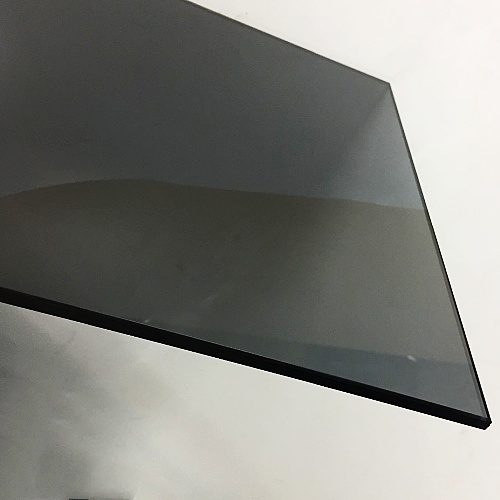
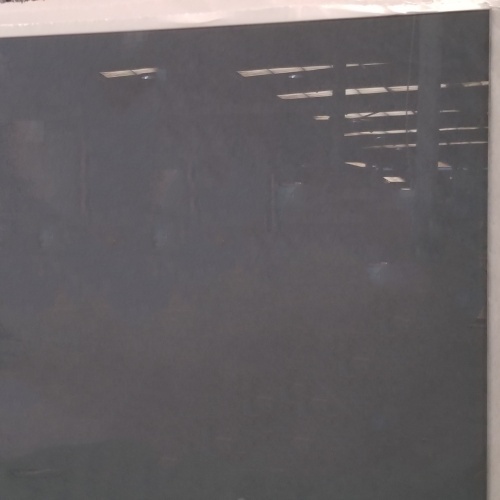
The colour sits in the body of the sheet, not in a film applied afterwards. That matters on a real project: there is no film edge for dirt to gather along, nothing to lift around a cut-out, and nothing that cleaning can peel away over the years. The grey tone pulls down the glare of direct sun and lowers the contrast between inside and out, so a room stays daylit while people passing see shapes rather than detail. Grey tempered glass is made to the drawing. Panels are cut from tinted float, the edges are ground or polished, and every hole, notch and corner radius is cut while the glass is still annealed. Only then does the sheet go through the furnace, where it is heated close to softening point and quenched so the surfaces lock into compression. After that the panel cannot be cut, drilled or edged again, which is why we ask for a dimensioned schedule rather than a list of approximate sizes. As a tempered glass supplier we work for glazing contractors, facade specialists, fabricators and fit-out teams, quoting against the drawing you send.
Tempering is what makes the sheet usable next to people. The quench leaves the outer surfaces in compression and the core in tension, and the panel comes out able to take knocks, point loads and the slam of a door that would crack ordinary annealed glass. It also handles a temperature difference across the face — sun on one side, conditioned air on the other — far better than annealed glass does.
If a panel is overloaded it breaks into small, blunt granules rather than long shards. That is the property that lets tempered glass sit in a shower enclosure, a partition beside a walkway or a door leaf, and it is why the product is written into safety glazing codes.
The weak point is always the edge. A chip or a bruise there is where a break starts, so keep panels upright on a rack, lift rather than drag, and look over the edges before installation. Because custom tempered glass panels cannot be re-worked after tempering, hardware positions and cut-outs have to be settled on the drawing; a misplaced hinge hole means a new panel, not a modification.
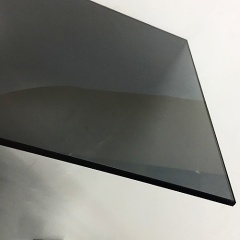
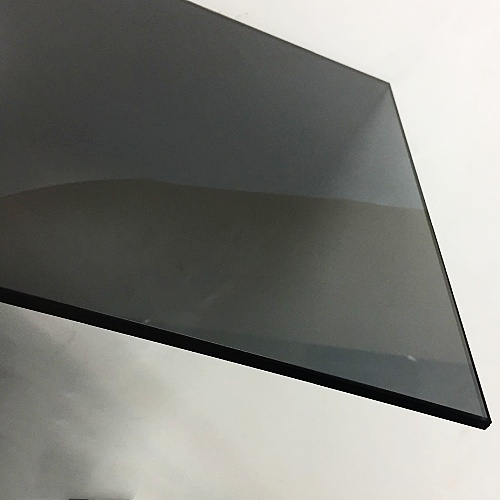
Grey reads as a smoke tone with a glossy, lightly reflective face. Against a bright sky the panel lightens; in a dim corridor it goes almost charcoal. Check the tone against the actual frame and in the light the finished opening will get, because the same sheet reads quite differently on a white sample board than it does on site.
Frames and fittings do much of the styling work. Dark anodised aluminium, black steel and stainless fixings let the tint carry the elevation, while pale timber or brass warms it into a residential scheme. It is a true grey rather than a strong colour, so it sits easily beside whatever else is in the room.
Where a screen has to stop at a certain height, a frosted or etched treatment can be combined with the tint so the lower band stays private while daylight still comes through above it. Tone differences show most where two panels meet at an angle: specify the corner panels of one elevation together and keep a single thickness across the run so the shade stays even.
The face of tempered glass is smooth and non-porous, so dust, fingerprints and soap film sit on the surface instead of soaking in. A soft cloth and a mild, non-abrasive detergent are enough; rinse and dry the frame and edges so water does not stand against the glass. Abrasive pads, scouring powder and metal scrapers dull the surface and leave fine scratches that catch the light.
In wet areas, wipe the seals and channels as part of the same routine and check that drainage runs freely. Leave any protective film in place until the surrounding trades have finished, then lift it away rather than letting sun bake it on, and store panels upright on a rack rather than flat.
The tint resists staining and discoloration, so an elevation keeps an even shade instead of going patchy. Glass is also one of the few building materials that can go back into a melt at end of life, and the sheet emits nothing into the room it encloses — a detail worth recording on projects with an indoor air quality or sustainability target.
| Property | Detail |
|---|---|
| Thickness | 4 mm, 5 mm, 6 mm, 8 mm, 10 mm, 12 mm, 15 mm |
| Edge work | Seamed, flat or polished |
| Minimum panel | 100 mm × 100 mm |
| Maximum sheet | 3660 mm × 2440 mm |
| European standard | CE EN 12150-2:2004 |
| US standards | ANSI Z97.1-2015(R2020), CPSC 16 CFR 1201-2024 |
| Canadian standard | CAN/CGSB-12.1-2022 |
| Tint | Grey, in the body of the glass |
| Optional finish | Frosted or etched band |
| Fabrication | Cut, drilled and edged to your drawing before tempering |
LYD GLASS manufactures and exports glass for project buyers, fabricators and contractors who prefer to buy direct from a production source. Everything we supply is made to order: send drawings, sizes, quantities and finishing requirements, and we return a factory quotation against them. Panels are packed for export in plywood crates or A-Steel racks and protected for sea freight. We work to your delivery schedule, support repeat orders and answer specification questions before production starts. Send your requirements for a quote.
The tint reduces glare and UV transmission and reflects part of the solar heat, so a sunlit room is easier to work in and fabrics, timber and displays fade more slowly. The exact figures depend on thickness, orientation, shading and climate, so we do not quote a single number; treat the tint as one input to the project's energy model. If a specification calls for a coated or laminated build-up, tell us the target and we will say whether this sheet still fits the assembly.
No. Holes, notches and edge profiles are cut while the glass is still annealed, and the sheet cannot be cut, drilled or edged once it has been tempered. Send the hardware schedule with the drawing so hinge, clamp and handle positions are worked in before the furnace. Any change after tempering means a new panel.
In daylight it lowers contrast, so people outside see shapes rather than detail. After dark the effect reverses: with a lit interior and a dark street, anyone standing close to the glass can see in. Where privacy has to hold around the clock, combine the tint with a frosted or etched band, or specify a laminated or patterned build-up instead.
As a working guide, 4-6 mm covers furniture glazing and small interior panels, 6-8 mm covers office partitions and a tempered glass shower door, and 10-15 mm is for large spans, heavy door leaves and high-traffic installations. The final thickness belongs to the structural and code check for the opening, so confirm it with your engineer; we cut to whatever the approved drawing calls for.
A seamed edge is the economical choice where the glass disappears into a frame, a flat edge gives a straight architectural line inside a shoe or channel, and a polished edge is worked bright and smooth for edges that stay on show, such as a partition end or a table top. Mark the exposed edges on your drawing and we will finish them accordingly.