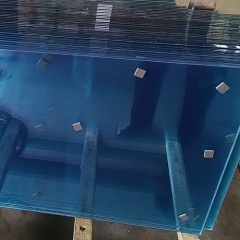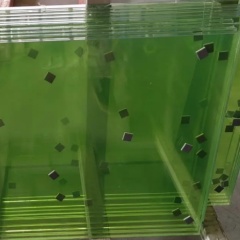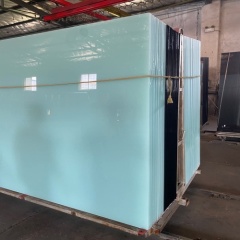
| Color Laminated Glass | |
| Glass thick | 3mm,4mm,5mm,6mm,8mm,10mm,12mm |
| Edge processing | Seamed Edge, Round edge ,Flat edge |
| Pvb Thick | 0.3mm,0.38mm,0.76mm,1.14mm,1.52mm |
| Pvb Color | Colorless, white, milk white, blue, green, gray, bronze, red, etc. |
| Min Size | 100mm*100mm |
| Max Size | 3660mm*2600mm |
| Port of Loading | Xingang port |
| Package | Plywood Crates |
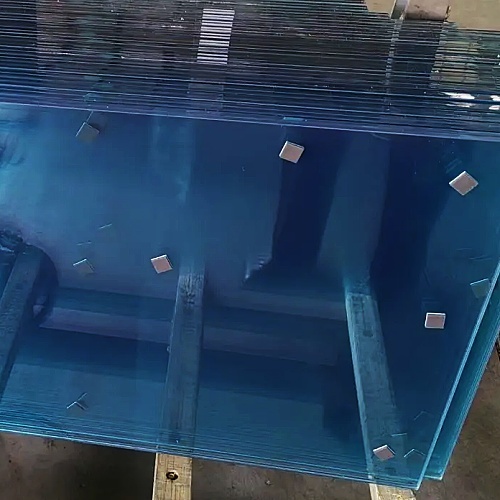
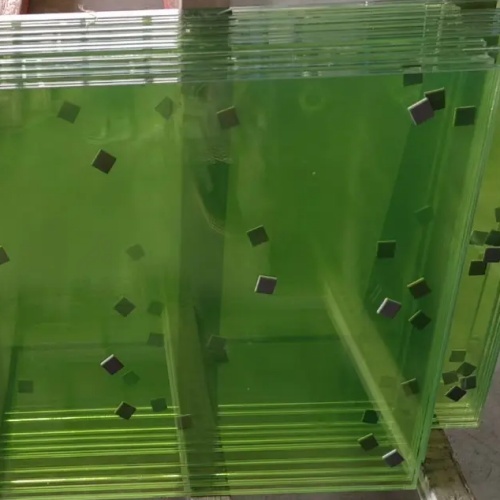
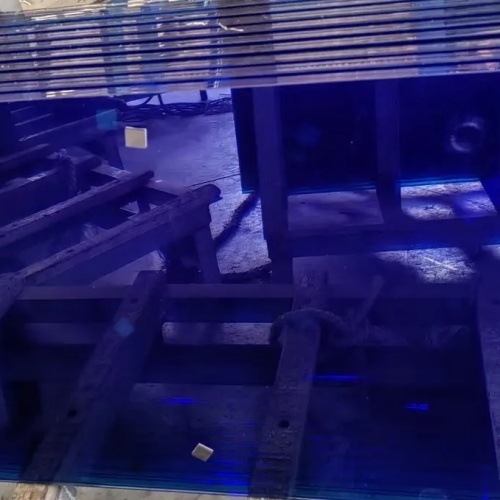
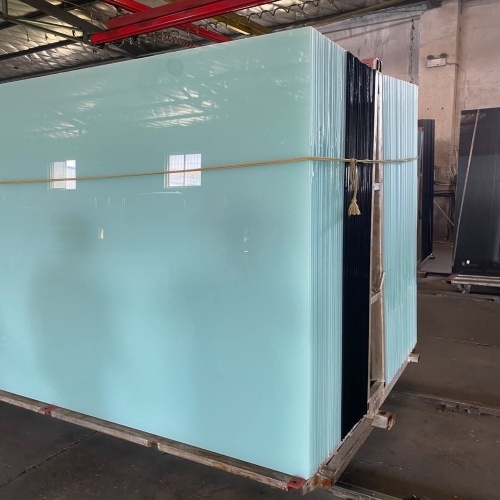
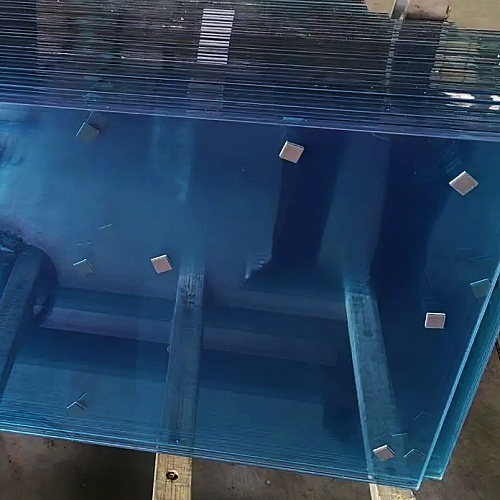
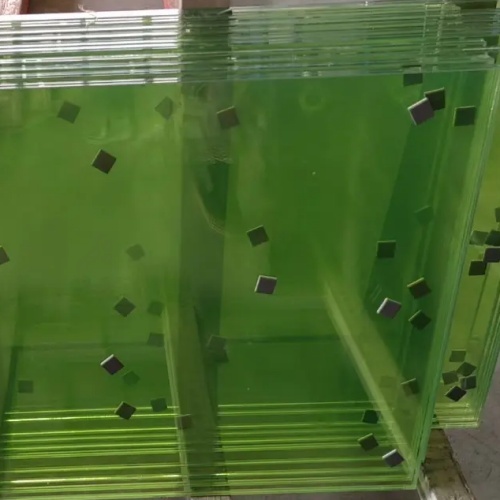
Colored laminated glass is a safety glass built from two or more glass sheets bonded around a colored polyvinyl butyral (PVB) interlayer. The color sits inside the laminate rather than on the face of the glass, so the panel keeps its gloss, its clean edge and its ability to stay in one piece when something hits it hard.
Most projects arrive here for one of three reasons: a partition that has to work as privacy glass without turning a room into a box, a facade that needs to cut glare and solar gain without going dark, or an interior that has to match a color scheme and still satisfy the safety requirement of the opening. One panel does all three, which is why architects, glazing contractors and fabricators specify this build instead of combining clear laminated glass with applied film, blinds or back-painted panels.
LYD GLASS is a laminated glass manufacturer based in Qinhuangdao, producing to drawing rather than to a stock list. Each panel is custom laminated glass, made in the thickness, color and edge finish the project calls for, and every order is quoted against the sizes and quantities you send.
Color laminated glass earns its place on a project when one panel has to do the work of several: hold together after impact, carry a color the design can use, and take the edge off a view or a noise problem at the same time. It suits facades, partitions, balustrades, shopfronts and furniture, and it can sit alongside clear or frosted panels from the same production run so an interior keeps one visual language. Where a project needs maximum post-breakage strength and nothing else, a structural laminate is the simpler answer. Where it needs a single sheet of color and no safety function, tinted float glass will do. This build is the one to specify when the color is part of the design and the opening still has to behave like safety glass. Working as laminated glass manufacturers, we quote each project against the sizes, thicknesses, colors and edge work it actually needs rather than around a fixed range. Send the drawing set and the quantity, and the build follows from there.
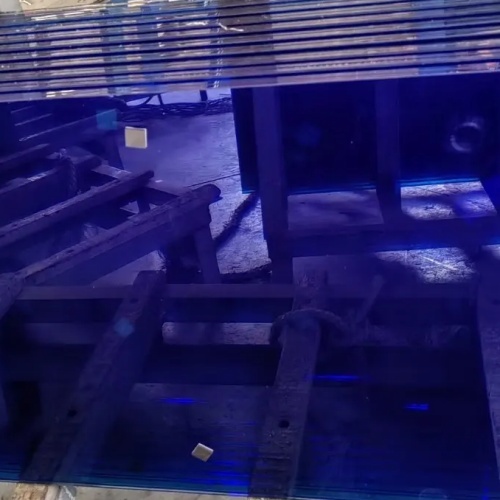
Color is the reason most buyers choose this build, and the range is wide enough to carry a scheme rather than just tint a window. Standard interlayers run through colorless, white, milk white, blue, green, gray, bronze and red, with other shades available to match a reference you supply. Depth varies as much as hue: a pale blue still reads as glass and keeps a room bright, while a deep indigo or a saturated green turns the panel almost opaque and becomes a surface in its own right. The face stays glossy, so the color shifts slightly with the light through the day, which is why a full-size panel tells you more than a small chip when the wall is large.
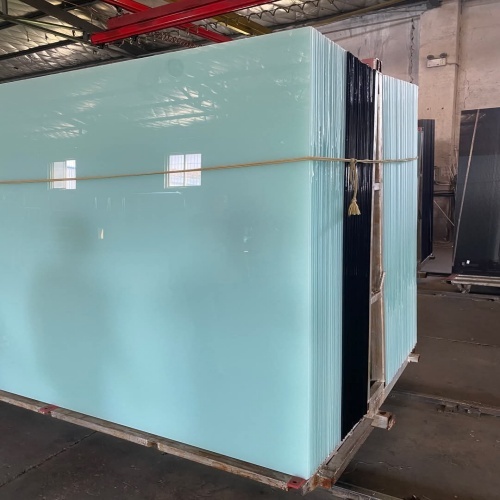
Transparency is set independently of color. A transparent interlayer gives a clear, jewel-like tint you can see through; a translucent or frosted build diffuses the view while still passing daylight and is the usual route to privacy glass; an opaque build closes the sightline completely. Because all three are made the same way, one elevation can mix them, clear at eye level and frosted above, without a change of supplier or glazing system.
That built-in color is the practical difference between colored laminated glass and a tinted film applied after the fact. There is nothing to peel, bubble or leave a border, and the shade does not wear thin where the panel is handled most.
Laminated glass panels do not fall apart. When a panel is struck hard enough to crack, the fragments stay bonded to the interlayer, so the opening stays closed and broken glass does not reach the floor or the people below. For a balustrade, an overhead skylight or a door taking daily traffic, that behavior is the reason the build gets specified at all.
Colored laminated glass does not weaken the safety function. A colored panel behaves exactly like a clear one of the same build — same glass, same bonding, same post-breakage retention — you simply get less light and more privacy in the bargain.
Forced entry is slowed rather than invited. Cutting through a laminated panel takes sustained effort and repeated impacts, which is why ground-floor windows, shopfronts and display cases are often upgraded to safety glass. Colored laminates do that work without looking like security glass, so a commercial frontage keeps its design intent.
A failure is easy to see. A cracked panel usually shows a spider pattern or a network of cracks held in place, which makes it simple to identify and schedule as a single replacement unit. Keep the original drawing with the project file so a replacement can be produced to the same interlayer reference.
If the opening is checked against a particular safety code, tell us which one at enquiry stage and we will confirm the build that applies before the order is placed.
The interlayer that carries the color also damps sound. Laminated glass panels cut traffic noise, conversation and equipment hum more effectively than a single sheet of the same overall thickness, because the soft core breaks the path that vibration travels along. A thicker interlayer pushes that further, which is why hotels, clinics and offices on busy streets tend to specify a laminate rather than monolithic glazing.
Privacy glass is where color does the work acoustics cannot do. A milk white or frosted interlayer gives a bright, evenly lit room with no view in or out. A deep blue or green brings the same effect with more character. A pale tint takes the edge off a sightline without pretending to hide anything. That range lets one specification cover a meeting room that needs full privacy, a consulting room that needs daylight, and a reception that wants a color statement.
The two benefits stack in the same panel. A hotel facing a main road gets the traffic noise down and stops guests being overlooked at the same time — difficult to achieve with blinds or film alone.
Privacy level is a design decision, not a fixed property. Tell us how much you want to see through the panel and what it has to hide, and we will point to the interlayer and tone that do it. If acoustic performance is specified as a target, include the figure with the enquiry so the build can be checked against it.
The exact gauges sit in the specification above; what matters here is which end of the range a job belongs at. - The middle gauges for partitions, doors, shower screens and shopfront displays — the common ground for architectural interiors. - The heaviest plies where a panel spans further, sits in a balustrade, or takes regular knocks in a public area. - The thinnest interlayer as the everyday starting point: enough for most decorative and interior panels. - One gauge up and beyond where the panel must hold together longer after impact, or where sound reduction is part of the brief. - The two heaviest interlayers for structural and overhead work, where what happens after breakage matters most. - Long panels. If a design runs past the maximum sheet size, split it into modules on the mullions; a joint set on a frame line reads better than a panel pushed to the limit of the process. - Mixed specification. Thickness, interlayer and color are quoted together as custom laminated glass, so tell us the priority — budget, weight, acoustic or post-breakage performance — and the build follows from it. - Cut to drawing. Panels are produced to the dimensions on your drawing rather than to a stock module, so an opening does not have to be redesigned around a catalogue. - Seamed edge for a soft, economical finish on panels that will be framed or where the edge is rarely touched. - Round edge for exposed edges on partitions and balustrades, where a hand may run along the glass and a polished profile matters. - Flat edge where panels butt together or sit in a clamp fixing, so the joint line stays tight and even. - Cut-outs and holes. Water-jet cut-outs for hinges, handles, sockets and fixings, drilled to your drawing before toughening or lamination as the build requires. - Marking. Logos and permanent marks applied to your specification for branded interiors and repeat commercial rollouts. - Mixed packages. One order can carry several colors, thicknesses and edge profiles, which keeps a project package on one delivery and one color reference. - OEM and ODM work is accepted where a brand needs its own drawing set, specification and packing marks. Working with laminated glass suppliers usually means choosing from a catalogue; here the drawing drives the panel. - What to send. PDF or DWG drawings, panel sizes, color reference, edge profile, quantity and the date you need the glass on site.
LYD GLASS manufactures and exports glass for project buyers, fabricators and contractors who prefer to buy direct from a production source. Everything we supply is made to order: send drawings, sizes, quantities and finishing requirements, and we return a factory quotation against them. Panels are packed for export in plywood crates or A-Steel racks and protected for sea freight. We work to your delivery schedule, support repeat orders and answer specification questions before production starts. Send your requirements for a quote.
Two or more glass sheets bonded around a colored polyvinyl butyral (PVB) interlayer. The PVB carries the color and also does the safety, UV and acoustic work, while the glass itself can be clear or body-tinted. Float glass and PVB come from established suppliers, and as laminated glass manufacturers we can confirm the exact brand and interlayer grade for your order on request.
Yes. Size, glass thickness, interlayer thickness, color and edge finish are all made to order, so the panel is built to your drawing rather than chosen from a stock range. Send the drawing with a color reference and the edge profile you want, and we will confirm the closest match before production. Working with laminated glass suppliers usually means picking from a list — here the list is only the starting point.
It depends on the shade and on whether you choose a transparent, translucent or opaque interlayer. A pale tint keeps a room bright, a mid-tone cuts glare while still passing daylight, and a deep shade or an opaque build closes the sightline. We do not publish a transmission figure per shade because it moves with interlayer and glass thickness; if the project has a daylight target, send it and we will advise on the build that meets it.
The interlayer holds the fragments, so the opening stays closed and the broken glass does not scatter. The crack pattern makes it clear which panel has failed, and because each panel is produced to drawing, the replacement is made to the same specification and interlayer reference. That is the practical advantage of laminated glass over a single tinted sheet in doors, overhead glazing and balustrades.
Yes. It glazes into standard window and door frames like any laminate, and it can also form one of the panes in an insulating unit where thermal performance matters. Check the frame's drainage and its maximum panel weight with the frame supplier, and make sure the glazing detail protects the panel edge. For laminated windows on exposed elevations, that edge protection is what keeps the panel looking right for years.
Tinted float glass is a single sheet with the color in the glass body, and it does not hold together when it breaks. Color laminated glass puts the color in an interlayer between two sheets, so you get the shade plus post-breakage retention, UV filtration and sound dampening from the same panel. Tinted float is the economical choice for a purely decorative pane; the laminate is the one to specify where the opening is above head height, in a door, or in a balustrade.