| 15mm Clear Tempered Glass | |
| Thick | 15mm |
| Edge processing | Flat edge and Polished |
| Standard | CE EN 12150-2:2004 |
| ANSI Z97.1-2015(R2020) | |
| CAN/CGSB-12.1-2022 | |
| CPSC 16 CFR 1201-2024 | |
| Min Size | 100mm*100mm |
| Max Size | 3660mm*2440mm |
| Port of Loading | Xingang port |
| Package | Plywood Crates,A-Steel Rack etc |
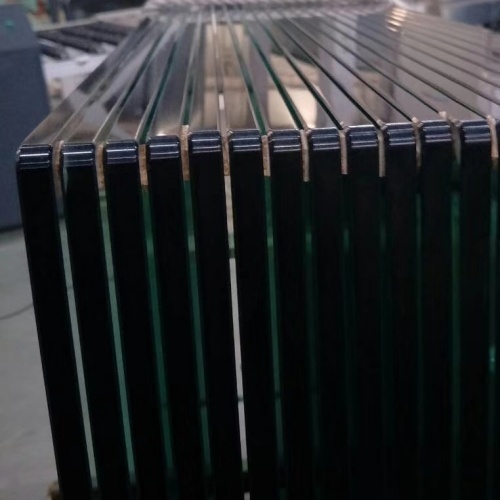
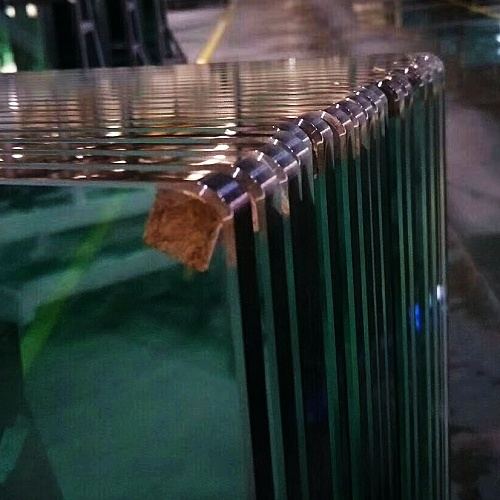
LYD GLASS produces tempered glass to order for architectural and interior projects. 15 mm tempered glass sits at the heavy end of our flat tempered range, and it is the grade to reach for when standard glazing would be working too hard: full-height shower screens, glass balustrades with exposed edges, shopfronts that take constant foot traffic, and partitions that run from floor to ceiling without intermediate framing. The extra mass also holds a flatter, steadier surface across a large span, which shows when a door swings past a fixed panel or when a long balustrade is viewed edge-on. Weight is the trade-off: a panel of this size is noticeably heavier than a 10 mm or 12 mm one, so check the rating of the hinges, clamps or spigots with your hardware supplier and plan lifting equipment for the site. As a tempered glass supplier we produce against your drawings rather than a catalogue, so the sizes you approve are the sizes we make. The glass is available in clear, frosted and tinted finishes, so the look can be matched to the design of the space. - Heavy-duty thickness — The extra mass stiffens the panel and cuts deflection under wind, impact and body load, which is why this gauge is specified for barriers, large screens and public-facing glazing. - Predictable break behaviour — If a panel fails, it breaks into small, blunt granules instead of long sharp shards, lowering the risk of serious cuts in the seconds after a break. - High impact and bending resistance — The tempering cycle puts the outer surfaces into compression, so the sheet stands up to knocks, point loads and bending well beyond what annealed glass of the same thickness would take. - Thermal stability — A tempered panel handles the daily heat-and-cool cycle of a sunlit facade, a skylight or an oven door without the thermal shock that cracks ordinary glass. - Made to your schedule — We cut tempered glass plates and full panels to the dimensions on your drawings, with holes, notches and edge profiles set at the same time. - Ready for exposed edges — Flat or polished edges allow the glass to be installed with the edge on show, without a capping frame to hide it.
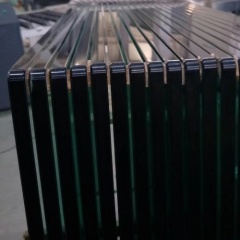
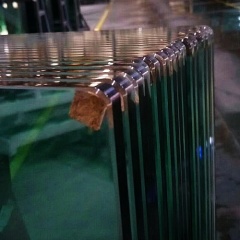
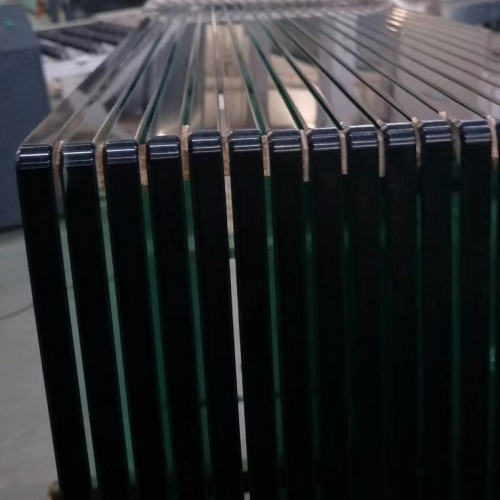
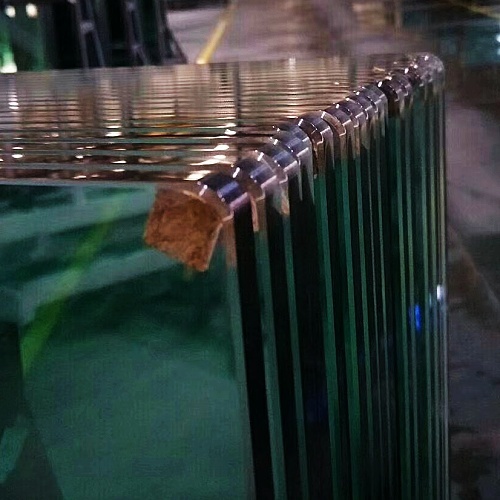
Clear float glass reads as almost colourless face-on, and the faint green line visible along a stacked sheet is the natural edge tint of clear glass. It shows only where an edge is left exposed and disappears once the panel sits in a frame or channel. For projects that need privacy or glare control, frosted and tinted versions are available on request; for a tone-critical facade, ask your sales contact about finish samples before you commit.
Edge finishing changes the way the glass reads in a room. A flat edge sits neatly inside a frame, shoe or clamp, which makes it the economical choice for captured installations. A polished edge is worked until it is bright and smooth, so a balustrade, tabletop or partition can be installed with the glass edge on show and still look complete.
Nothing soaks into the surface, so dust, fingerprints and soap film sit on top of the glass rather than in it. That is what keeps upkeep simple: a soft cloth and a mild cleaner restore the view, and there is no coating to renew. On a tempered glass shower door, wipe the bottom seal and the hinge area as part of the same routine so residue does not collect where it is hard to reach. The same habit keeps tempered glass plates used as tabletops clear, since everyday marks sit on the surface rather than in it.
Handle panels with clean gloves and never drag one sheet across another. A chipped edge is a weak point in any tempered panel, and it is far easier to avoid than to repair. The smooth surface wipes clean easily, which keeps day-to-day upkeep simple in demanding applications.
| Property | Value |
|---|---|
| Product | 15 mm clear tempered glass |
| Thickness | 15 mm |
| Edge processing | Flat edge and Polished |
| Standard (Europe) | CE EN 12150-2:2004 |
| Standard (United States) | ANSI Z97.1-2015(R2020) and CPSC 16 CFR 1201-2024 |
| Standard (Canada) | CAN/CGSB-12.1-2022 |
| Minimum size | 100 mm × 100 mm |
| Maximum size | 3660 mm × 2440 mm |
| Surface finish | Clear as standard; frosted and tinted available on request |
| Port of loading | Xingang port |
| Packing | Plywood crates, A-steel racks |
LYD GLASS manufactures and exports glass for project buyers, fabricators and contractors who prefer to buy direct from a production source. Everything we supply is made to order: send drawings, sizes, quantities and finishing requirements, and we return a factory quotation against them. Panels are packed for export in plywood crates or A-Steel racks and protected for sea freight. We work to your delivery schedule, support repeat orders and answer specification questions before production starts. Send your requirements for a quote.
Panels can be cut anywhere between 100 mm × 100 mm and 3660 mm × 2440 mm, the maximum sheet size, and within that window every panel is made to your own dimensions — so a small shelf and a full-height screen come from the same specification.
Yes. Edge processing is flat edge or polished, and custom tempered glass panels are cut to the sizes on your drawings. Holes, hinge cut-outs and notches are made before tempering, so send the full detail with your enquiry and we will work through the drawings with you before production.
Use a soft cloth or squeegee with a mild, non-abrasive cleaner diluted in water, then rinse and dry. Avoid scouring pads, abrasive powders and strong chemicals, which can dull the surface or attack edge seals; on shower installations, clean the seals and channels as part of the same routine.
It is produced to the European, US and Canadian safety glazing standards, with the exact editions listed in the specifications table. Tell us which market the project is being reviewed in and we will confirm the documentation we can supply for local approval.
Yes — 15 mm tempered glass is often chosen for enclosures that should feel solid and heavy. Because the panel is heavier than the thinner grades used for shower doors, check that the hinges, handle and pivot are rated for the size and weight you are ordering.
Tempered glass breaks into small, blunt granules rather than long shards, which is exactly why it is used where people stand close to the glass. The panel still has to be replaced, so keep a note of its size and cut-outs before installation.